产品: 磷酸化 MEK1/2 (Ser218+Ser222/Ser222+Ser226) 抗体
货号: AF8035
描述: Rabbit polyclonal antibody to Phospho-MEK1/2 (Ser218+Ser222/Ser222+Ser226)
应用: WB IHC IF/ICC
文献验证: WB, IF/ICC
反应: Human, Mouse, Rat
预测: Pig, Zebrafish, Bovine, Horse, Sheep, Rabbit, Dog, Chicken, Xenopus
蛋白号: Q02750 | P36507
RRID: AB_2840098

浏览相似产品>>

   规格 价格 库存
 50ul RMB¥ 1500 现货
 100ul RMB¥ 2800 现货

货期: 当天发货

联系销售

产品描述

来源:
Rabbit
应用:
WB 1:1000-3000, IHC 1:50-1:200, IF/ICC 1:100-1:500
*The optimal dilutions should be determined by the end user. For optimal experimental results, antibody reuse is not recommended.
*Tips:

WB: 适用于变性蛋白样本的免疫印迹检测. IHC: 适用于组织样本的石蜡(IHC-p)或冰冻(IHC-f)切片样本的免疫组化/荧光检测. IF/ICC: 适用于细胞样本的荧光检测. ELISA(peptide): 适用于抗原肽的ELISA检测.

反应:
Human, Mouse, Rat
克隆:
Polyclonal
特异性:
Phospho-MEK1/2 (Ser218+Ser222/Ser222+Ser226) Antibody detects endogenous levels of MEK1/2 only when phosphorylated at S218+S222(MEK1)/S222+S226(MEK2).
RRID:
AB_2840098
引用格式: Affinity Biosciences Cat# AF8035, RRID:AB_2840098.
偶联:
Unconjugated.
纯化:
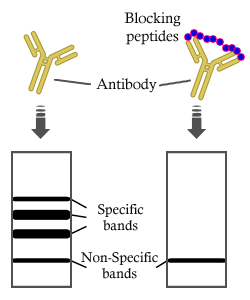
The antibody is from purified rabbit serum by affinity purification via sequential chromatography on phospho-peptide and non-phospho-peptide affinity columns.
保存:
Rabbit IgG in phosphate buffered saline , pH 7.4, 150mM NaCl, 0.02% sodium azide and 50% glycerol. Store at -20 °C. Stable for 12 months from date of receipt.
别名:

展开/折叠

Dual specificity mitogen activated protein kinase kinase 1; Dual specificity mitogen-activated protein kinase kinase 1; ERK activator kinase 1; MAP kinase kinase 1; MAP kinase/Erk kinase 1; MAP2K1; MAPK/ERK kinase 1; MAPKK 1; MAPKK1; MEK 1; Mek1; MEKK1; Mitogen activated protein kinase kinase 1; MKK 1; MKK1; MP2K1_HUMAN; PRKMK1; Protein kinase mitogen activated kinase 1 (MAP kinase kinase 1); Protein kinase mitogen activated, kinase 1; Cardiofaciocutaneous syndrome; CFC syndrome; CFC4; Dual specificity mitogen activated protein kinase kinase 2; Dual specificity mitogen-activated protein kinase kinase 2; ERK activator kinase 2; FLJ26075; MAP kinase kinase 2; map2k2; MAPK / ERK kinase 2; MAPK/ERK kinase 2; MAPKK 2; MAPKK2; MEK 2; MEK2; Microtubule associated protein kinase kinase 2; Mitogen activated protein kinase kinase 2; Mitogen activated protein kinase kinase 2 p45; MKK 2; MKK2; MP2K2_HUMAN; OTTHUMP00000165826; OTTHUMP00000165827; PRKMK 2; PRKMK2;

抗原和靶标

免疫原:

A synthesized peptide derived from human MEK1/2 around the phosphorylation site of Ser218+Ser222/Ser222+Ser226.

基因/基因ID:

研究领域

· Cellular Processes > Cell growth and death > Oocyte meiosis.   (View pathway)

· Cellular Processes > Transport and catabolism > Autophagy - animal.   (View pathway)

· Cellular Processes > Cell growth and death > Apoptosis.   (View pathway)

· Cellular Processes > Cell growth and death > Cellular senescence.   (View pathway)

· Cellular Processes > Cellular community - eukaryotes > Focal adhesion.   (View pathway)

· Cellular Processes > Cellular community - eukaryotes > Gap junction.   (View pathway)

· Cellular Processes > Cellular community - eukaryotes > Signaling pathways regulating pluripotency of stem cells.   (View pathway)

· Cellular Processes > Cell motility > Regulation of actin cytoskeleton.   (View pathway)

· Environmental Information Processing > Signal transduction > MAPK signaling pathway.   (View pathway)

· Environmental Information Processing > Signal transduction > ErbB signaling pathway.   (View pathway)

· Environmental Information Processing > Signal transduction > Ras signaling pathway.   (View pathway)

· Environmental Information Processing > Signal transduction > Rap1 signaling pathway.   (View pathway)

· Environmental Information Processing > Signal transduction > cGMP-PKG signaling pathway.   (View pathway)

· Environmental Information Processing > Signal transduction > cAMP signaling pathway.   (View pathway)

· Environmental Information Processing > Signal transduction > HIF-1 signaling pathway.   (View pathway)

· Environmental Information Processing > Signal transduction > FoxO signaling pathway.   (View pathway)

· Environmental Information Processing > Signal transduction > Sphingolipid signaling pathway.   (View pathway)

· Environmental Information Processing > Signal transduction > Phospholipase D signaling pathway.   (View pathway)

· Environmental Information Processing > Signal transduction > mTOR signaling pathway.   (View pathway)

· Environmental Information Processing > Signal transduction > PI3K-Akt signaling pathway.   (View pathway)

· Environmental Information Processing > Signal transduction > Apelin signaling pathway.   (View pathway)

· Environmental Information Processing > Signal transduction > TNF signaling pathway.   (View pathway)

· Human Diseases > Drug resistance: Antineoplastic > EGFR tyrosine kinase inhibitor resistance.

· Human Diseases > Drug resistance: Antineoplastic > Endocrine resistance.

· Human Diseases > Neurodegenerative diseases > Prion diseases.

· Human Diseases > Substance dependence > Alcoholism.

· Human Diseases > Infectious diseases: Viral > Hepatitis B.

· Human Diseases > Infectious diseases: Viral > Influenza A.

· Human Diseases > Infectious diseases: Viral > Human papillomavirus infection.

· Human Diseases > Cancers: Overview > Pathways in cancer.   (View pathway)

· Human Diseases > Cancers: Overview > Proteoglycans in cancer.

· Human Diseases > Cancers: Overview > MicroRNAs in cancer.

· Human Diseases > Cancers: Specific types > Colorectal cancer.   (View pathway)

· Human Diseases > Cancers: Specific types > Renal cell carcinoma.   (View pathway)

· Human Diseases > Cancers: Specific types > Pancreatic cancer.   (View pathway)

· Human Diseases > Cancers: Specific types > Endometrial cancer.   (View pathway)

· Human Diseases > Cancers: Specific types > Glioma.   (View pathway)

· Human Diseases > Cancers: Specific types > Prostate cancer.   (View pathway)

· Human Diseases > Cancers: Specific types > Thyroid cancer.   (View pathway)

· Human Diseases > Cancers: Specific types > Melanoma.   (View pathway)

· Human Diseases > Cancers: Specific types > Bladder cancer.   (View pathway)

· Human Diseases > Cancers: Specific types > Chronic myeloid leukemia.   (View pathway)

· Human Diseases > Cancers: Specific types > Acute myeloid leukemia.   (View pathway)

· Human Diseases > Cancers: Specific types > Non-small cell lung cancer.   (View pathway)

· Human Diseases > Cancers: Specific types > Breast cancer.   (View pathway)

· Human Diseases > Cancers: Specific types > Hepatocellular carcinoma.   (View pathway)

· Human Diseases > Cancers: Specific types > Gastric cancer.   (View pathway)

· Human Diseases > Cancers: Overview > Central carbon metabolism in cancer.   (View pathway)

· Human Diseases > Cancers: Overview > Choline metabolism in cancer.   (View pathway)

· Organismal Systems > Immune system > Chemokine signaling pathway.   (View pathway)

· Organismal Systems > Circulatory system > Vascular smooth muscle contraction.   (View pathway)

· Organismal Systems > Development > Osteoclast differentiation.   (View pathway)

· Organismal Systems > Immune system > Toll-like receptor signaling pathway.   (View pathway)

· Organismal Systems > Immune system > Natural killer cell mediated cytotoxicity.   (View pathway)

· Organismal Systems > Immune system > T cell receptor signaling pathway.   (View pathway)

· Organismal Systems > Immune system > B cell receptor signaling pathway.   (View pathway)

· Organismal Systems > Immune system > Fc epsilon RI signaling pathway.   (View pathway)

· Organismal Systems > Immune system > Fc gamma R-mediated phagocytosis.   (View pathway)

· Organismal Systems > Nervous system > Long-term potentiation.

· Organismal Systems > Nervous system > Neurotrophin signaling pathway.   (View pathway)

· Organismal Systems > Nervous system > Cholinergic synapse.

· Organismal Systems > Nervous system > Serotonergic synapse.

· Organismal Systems > Nervous system > Long-term depression.

· Organismal Systems > Endocrine system > Insulin signaling pathway.   (View pathway)

· Organismal Systems > Endocrine system > Progesterone-mediated oocyte maturation.

· Organismal Systems > Endocrine system > Estrogen signaling pathway.   (View pathway)

· Organismal Systems > Endocrine system > Melanogenesis.

· Organismal Systems > Endocrine system > Prolactin signaling pathway.   (View pathway)

· Organismal Systems > Endocrine system > Thyroid hormone signaling pathway.   (View pathway)

· Organismal Systems > Endocrine system > Oxytocin signaling pathway.

· Organismal Systems > Endocrine system > Relaxin signaling pathway.

文献引用

1). Bufalin inhibits hepatocellular carcinoma progression by blocking EGFR-mediated RAS-RAF-MEK-ERK pathway activation. Journal of experimental & clinical cancer research : CR, 2025 (PubMed: 40883741) [IF=11.3]

Application: WB    Species: human    Sample: HepG2 and HCCLM3 cells
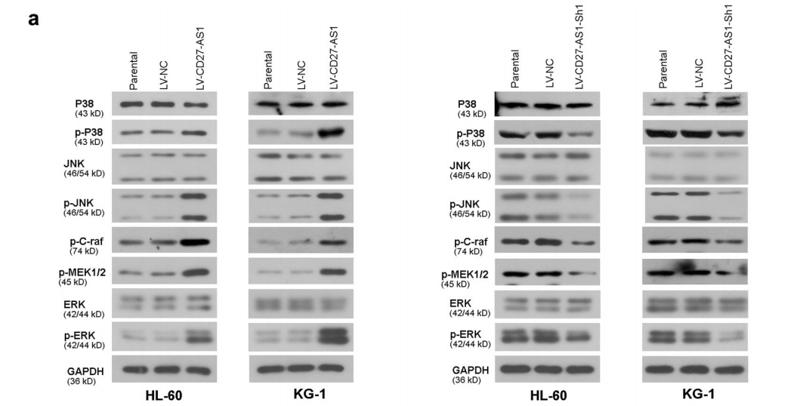
Fig. 5 BF inhibits the activation of EGFR-mediated RAS/RAF/MEK/ERK pathway. (A) Immunoblotting of p-EGFR, EGFR, p-RAF, RAF, p-MEK1/2, MEK1/2, p-ERK1/2, ERK1/2, and Pan RAS protein expression in HepG2 and HCCLM3. (B, C) Relative protein expression of p-EGFR/EGFR, p-RAF/RAF, p-MEK1/2/MEK1/2, p-ERK1/2/ERK1/2, and Pan RAS/GAPDH in HepG2 (B) and HCCLM3 (C). (D) IF staining of p-EGFR and p-ERK1/2 in HepG2. (E, F) Relative fluorescence intensity of p-EGFR (E) and p-ERK1/2 (F) in HepG2. Data are expressed as mean ± SD from three independent experiments with biological duplicates. *P 

2). LncRNA CD27-AS1 promotes acute myeloid leukemia progression through the miR-224-5p/PBX3 signaling circuit. Cell Death & Disease, 2021 (PubMed: 34006845) [IF=8.1]

Application: WB    Species: Human    Sample: AML cells
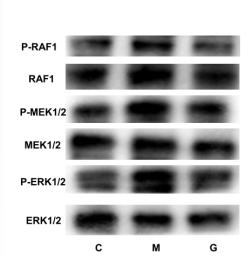
Fig. 5 CD27-AS1 regulates MAPK signaling pathway in the AML cell lines. a HL-60 and KG-1 cells were infected with LV-CD27-AS1 and LV-CD27- AS1-Sh1. Protein levels of P38, p-P38, JNK, p-JNK, p-C-raf, p-MEK1/2, ERK, and p-ERK were detected using western blotting. b Densitometry analysis of protein levels in both cells was performed. c U0126, a MEK1/2 inhibitor, was used to treat the AML cells with CD27-AS1 upregulation. Relative protein levels of p-ERK and ERK were measured using western blotting. d CCK-8 assay was performed to check cell viability. N = 3. Data were shown as means ± SD. *P < 0.05, **P < 0.01, and ***P < 0.001.

3). HRH1-targeting mAb: a precision therapeutic strategy for Glioblastoma. Oncogene, 2025 (PubMed: 41125791) [IF=6.9]

4). Serum proteomics analysis based on label-free revealed the protective effect of Chinese herbal formula Gu-Ben-Fang-Xiao. BIOMEDICINE & PHARMACOTHERAPY, 2019 (PubMed: 31520916) [IF=6.9]

Application: WB    Species: mouse    Sample: lung

Figure S2. |The effect of GBFXD on RAF/MEK/ERK signaling pathway. Western blotting was used to detect the relative protein expressions of P-RAF/RAF, P-MEK/MEK, and P-ERK/ERK.

5). Discovery of Novel P2Y14R Inhibitors for Ameliorating Liver Fibrosis by Suppressing Hepatic Stellate Cell Activation. Journal of medicinal chemistry, 2025 (PubMed: 41178760) [IF=6.8]

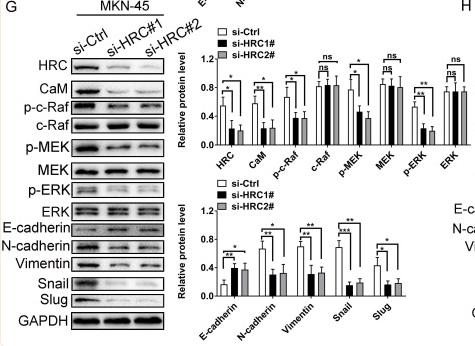
6). NCAPD3 contributes to lung cancer progression through modulated lactate-induced histone lactylation and MEK/ERK/LDHA axis. Cancer cell international, 2025 (PubMed: 40410796) [IF=5.8]

Application: WB    Species: human    Sample: LC cells
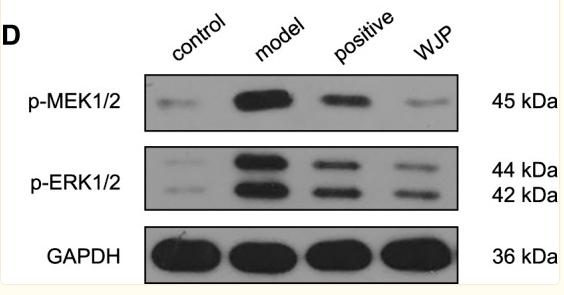
Fig. 4 NCAPD3 regulated aerobic glycolysis in LC cells through the MEK/ERK/LDHA signaling pathway. (A) The protein levels of MEK/ERK pathway-associated targets were detected by western blotting in NCAPD3-knockdown H1975 cells and NCAPD3-over-expression HCC827 cells. (B) Cell proliferation in HCC827 cells treated with U0126 (50 µM) and NCAPD3 overexpression plasmids in alone or combination was assessed by a colony formation assay. (C) Glucose uptake in HCC827 cells treated with U0126 (50 µM) and NCAPD3 overexpression plasmids in alone or combination was assessed by Flow cytometry. (D) The lactate levels in HCC827 cells treated with U0126 (50 µM) and NCAPD3 overexpression plasmids in alone or combination were assessed by the Lactic Acid (LA) Content Assay Kit. (E) The protein expression levels of HK2, PKM2, GLUT1, LDHA, p-MEK, MEK, p-ERK, and ERK in HCC827 cells treated with U0126 (50 µM) and NCAPD3 overexpression plasmids in alone or combination were detected through western blotting. ▲P 

7). Wenshen-Jianpi prescription, a Chinese herbal medicine, improves visceral hypersensitivity in a rat model of IBS-D by regulating the MEK/ERK signal pathway. Frontiers in Pharmacology, 2022 (PubMed: 36210803) [IF=5.6]

Application: WB    Species: Rat    Sample: colon tissues
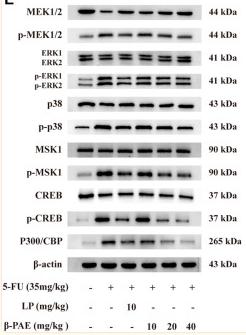
FIGURE 7 Effect of WJP on the relative expression of mRNA of MEK1, MEK2, ERK1, and ERK2 and the relative expression of protein of p-MEK1/2, p-ERK1, and p-ERK2 in the colon in the four groups. (A) The relative expression of mRNA of MEK1, MEK2, ERK1, and ERK2. (B) The relative expression of protein of p-MEK1/2. (C) The relative expression of protein of p-ERK1 and p-ERK2. (D) Western blot analysis. *p < 0.05; **p < 0.01, versus the control group. # p < 0.05; ## p < 0.01, versus the model group. ▲ p < 0.05; ▲▲ p < 0.01, versus the positive drug group.

8). β-Patchoulene Ameliorates Water Transport and the Mucus Barrier in 5-Fluorouracil-Induced Intestinal Mucositis Rats via the cAMP/PKA/CREB Signaling Pathway. Frontiers in Pharmacology, 2021 (PubMed: 34512326) [IF=5.6]

Application: WB    Species: Rat    Sample:

FIGURE 5 Effects of β-PAE on AQP3 expression and cAMP/PKA/CREB signaling pathway-related proteins. (A,B) AQP3 expression; (C,D) VIP, VIPR2, cAMP and PKA expression; (E,F) MEK1/2, p-MEK1/2, ERK, p-ERK, p-p38, p38, MSK1, p-MSK1, CREB, p-CREB, and P300/CBP expression. Data are shown as mean ± SD (n = 3). # p < 0.05, ## p < 0.01 versus control group; * p < 0.05, ** p < 0.01 versus 5-FU group.

9). Exercise-induced endothelial Mecp2 lactylation suppresses atherosclerosis via the Ereg/MAPK signalling pathway. Atherosclerosis, 2023 (PubMed: 37245426) [IF=4.9]

Application: WB    Species: mouse    Sample:

Fig. 4. Mecp2k271la effects inflammatory response through Ereg/MAPK signaling pathway in ECs. MAECs were treated with Ereg siRNA (siEreg), Ereg (100 ng/mL, rhEreg), co-cultured with rhEreg (100 ng/mL) and Lactate (20 mM). Western blotting measured the protein level of Mecp2k271a (A), Ereg (A) and P-Erk1/2 (B), P-Mek1/2 (B), P-Raf (B), P-Egfr (B), (n = 3). (C) Immunofluorescence staining showing P-Erk1/2 levels in MAECs. (D) Relative fluorescence intensity of P-Erk1/2 in MAECs (n = 3). (E) Immunofluorescence staining shows P-Mek1/2 levels in MAECs. (F) Relative fluorescence intensity of P-Mek1/2 in MAECs, (n = 3). (G) qRT-PCR analysis of IL-6, IL-1β, Enos mRNA level in MAECs (n = 3). MAECs were treated with P300 siRNA (siP300), lactate (20 mM), siP300+ lactate (20 mM). (H–I) Mecp2k271la (H), Ereg (H) and P-Erk1/2 (I), P-Mek1/2 (I), P-Raf (I), P-Egfr (I) proteins levels measured by Western blotting (n = 3). P-Erk1/2 (J) and P-Mek1/2 (L) levels in MAECs visualized by immunofluorescence staining. Relative fluorescence intensity of P-Erk1/2 and P-Mek1/2 in the four groups of MAECs is shown in (K) and (M) (n = 3). (N) qRT-PCR analysis of IL-6, IL-1β, Enos mRNA level in MAECs (n = 3). Data are expressed as the means ± SDs. p values were determined by one-way ANOVA with Fisher's LSD post-hoc test. *p < 0.05; **, p < 0.01; ***, p < 0.001; ****, p < 0.0001.

Application: IF/ICC    Species: mouse    Sample: MAECs

Fig. 4. Mecp2k271la effects inflammatory response through Ereg/MAPK signaling pathway in ECs. MAECs were treated with Ereg siRNA (siEreg), Ereg (100 ng/mL, rhEreg), co-cultured with rhEreg (100 ng/mL) and Lactate (20 mM). Western blotting measured the protein level of Mecp2k271a (A), Ereg (A) and P-Erk1/2 (B), P-Mek1/2 (B), P-Raf (B), P-Egfr (B), (n = 3). (C) Immunofluorescence staining showing P-Erk1/2 levels in MAECs. (D) Relative fluorescence intensity of P-Erk1/2 in MAECs (n = 3). (E) Immunofluorescence staining shows P-Mek1/2 levels in MAECs. (F) Relative fluorescence intensity of P-Mek1/2 in MAECs, (n = 3). (G) qRT-PCR analysis of IL-6, IL-1β, Enos mRNA level in MAECs (n = 3). MAECs were treated with P300 siRNA (siP300), lactate (20 mM), siP300+ lactate (20 mM). (H–I) Mecp2k271la (H), Ereg (H) and P-Erk1/2 (I), P-Mek1/2 (I), P-Raf (I), P-Egfr (I) proteins levels measured by Western blotting (n = 3). P-Erk1/2 (J) and P-Mek1/2 (L) levels in MAECs visualized by immunofluorescence staining. Relative fluorescence intensity of P-Erk1/2 and P-Mek1/2 in the four groups of MAECs is shown in (K) and (M) (n = 3). (N) qRT-PCR analysis of IL-6, IL-1β, Enos mRNA level in MAECs (n = 3). Data are expressed as the means ± SDs. p values were determined by one-way ANOVA with Fisher's LSD post-hoc test. *p < 0.05; **, p < 0.01; ***, p < 0.001; ****, p < 0.0001.

10). Mechanisms of pancreatic tumor suppression mediated by Xiang-lian pill: An integrated in silico exploration and experimental validation. JOURNAL OF ETHNOPHARMACOLOGY, 2022 (PubMed: 35931303) [IF=4.8]

Application: WB    Species: Mouse    Sample:

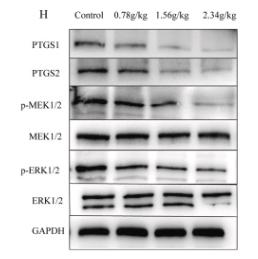
Fig. 6. XLP suppressed pancreatic tumor growth of tumor-bearing mice. (A) Tumors of mice in different groups treated with different doses of XLP; (B) Tumor weights among different groups; (C) Tumor volume increased over time; (D) HE staining of mouse liver and kidney tissues; (E) Mouse body weight over time; (F) Tumor pathology among four groups under microscopy (HE, 200 × ), and the expression of Ki-67, PTGS2 and PTGS1 among four groups (IHC, 400 × ); (G) Quantitation of the IHC positive area of Ki-67, PTGS2 and PTGS1 in the tumor tissues of four groups (n = 8 each group, each dot represents one sample); (H) The expression of PTGS1 and PTGS2, the phosphorylation of MEK and ERK among four groups by immunoblotting; (I) Statistical analysis of the immunoblotting results. * denotes p < 0.05, ** p < 0.01 and *** p < 0.001 when compared with the control group; # denotes p < 0.05, ## p < 0.01 and ### p < 0.001 when compared with the 0.78 g/kg XLP group.

加载更多

限制条款

产品的规格、报价、验证数据请以官网为准,官网链接:www.affbiotech.com | www.affbiotech.cn(简体中文)| www.affbiotech.jp(日本語)

产品的数据信息为Affinity所有,未经授权不得收集Affinity官网数据或资料用于商业用途,对抄袭产品数据的行为我们将保留诉诸法律的权利。

产品相关数据会因产品批次、产品检测情况随时调整,如您已订购该产品,请以订购时随货说明书为准,否则请以官网内容为准,官网内容有改动时恕不另行通知。

Affinity保证所销售产品均经过严格质量检测。如您购买的商品在规定时间内出现问题需要售后时,请您在Affinity官方渠道提交售后申请。

产品仅供科学研究使用。不用于诊断和治疗。 

产品未经授权不得转售。

Affinity Biosciences将不会对在使用我们的产品时可能发生的专利侵权或其他侵权行为负责。Affinity Biosciences, Affinity Biosciences标志和所有其他商标所有权归Affinity Biosciences LTD.