产品: 磷酸化 RIPK1 (Ser166) 抗体
货号: AF2398
描述: Rabbit polyclonal antibody to Phospho-RIPK1 (Ser166)
应用: WB IHC IF/ICC
文献验证: WB, IF/ICC
反应: Human, Mouse
蛋白号: Q13546
RRID: AB_2845412

浏览相似产品>>

   规格 价格 库存
 100ul RMB¥ 2800 现货
 200ul RMB¥ 3800 现货

货期: 当天发货

联系销售

产品描述

来源:
Rabbit
应用:
WB 1:500-1:2000, IHC 1:50-1:200, IF/ICC 1:100-1:500
*The optimal dilutions should be determined by the end user. For optimal experimental results, antibody reuse is not recommended.
*Tips:

WB: 适用于变性蛋白样本的免疫印迹检测. IHC: 适用于组织样本的石蜡(IHC-p)或冰冻(IHC-f)切片样本的免疫组化/荧光检测. IF/ICC: 适用于细胞样本的荧光检测. ELISA(peptide): 适用于抗原肽的ELISA检测.

反应:
Human, Mouse
克隆:
Polyclonal
特异性:
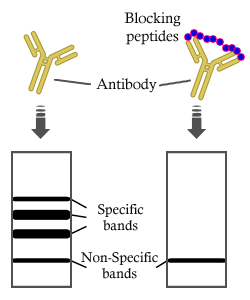
Phospho-RIPK1 (Ser166) Antibody detects endogenous levels of RIPK1 only when phosphorylated at Ser166.
RRID:
AB_2845412
引用格式: Affinity Biosciences Cat# AF2398, RRID:AB_2845412.
偶联:
Unconjugated.
纯化:
The antibody is from purified rabbit serum by affinity purification via sequential chromatography on phospho-peptide and non-phospho-peptide affinity columns.
保存:
Rabbit IgG in phosphate buffered saline , pH 7.4, 150mM NaCl, 0.02% sodium azide and 50% glycerol. Store at -20 °C. Stable for 12 months from date of receipt.
别名:

展开/折叠

Cell death protein RIP; FLJ39204; OTTHUMP00000039163; Receptor (TNFRSF) interacting serine threonine kinase 1; receptor interacting protein 1; Receptor interacting protein; Receptor interacting protein kinase 1; Receptor interacting serine threonine protein kinase 1; Receptor TNFRSF interacting serine threonine kinase 1; Receptor-interacting protein 1; Receptor-interacting serine/threonine-protein kinase 1; Rinp; RIP 1; RIP; Rip-1; RIP1; RIPK 1; Ripk1; RIPK1_HUMAN; Serine threonine protein kinase RIP; Serine/threonine-protein kinase RIP;

抗原和靶标

免疫原:

A synthesized peptide derived from human RIP around the phosphorylation site of Ser166.

基因/基因ID:

研究领域

· Cellular Processes > Cell growth and death > Apoptosis.   (View pathway)

· Cellular Processes > Cell growth and death > Necroptosis.   (View pathway)

· Environmental Information Processing > Signal transduction > NF-kappa B signaling pathway.   (View pathway)

· Environmental Information Processing > Signal transduction > TNF signaling pathway.   (View pathway)

· Human Diseases > Infectious diseases: Viral > Hepatitis C.

· Human Diseases > Infectious diseases: Viral > Epstein-Barr virus infection.

· Organismal Systems > Immune system > Toll-like receptor signaling pathway.   (View pathway)

· Organismal Systems > Immune system > NOD-like receptor signaling pathway.   (View pathway)

· Organismal Systems > Immune system > RIG-I-like receptor signaling pathway.   (View pathway)

· Organismal Systems > Immune system > Cytosolic DNA-sensing pathway.   (View pathway)

文献引用
1). P2Y14R activation facilitates liver regeneration via CREB/DNMT3b/Dact-2/ β-Catenin signals in acute liver failure. Acta pharmaceutica Sinica. B, 2025 (PubMed: 40177539) [IF=14.7]

2). Polysaccharide from Strongylocentrotus nudus eggs regulates intestinal epithelial autophagy through CD36/PI3K-Akt pathway to ameliorate inflammatory bowel disease. International Journal of Biological Macromolecules, 2023 (PubMed: 37327932) [IF=7.7]

3). Cyclic helix B peptide promotes random‐pattern skin flap survival via TFE3‐mediated enhancement of autophagy and reduction of ROS levels. British Journal of Pharmacology, 2022 (PubMed: 34622942) [IF=6.8]

Application: WB    Species: Mouse    Sample: skin tissues

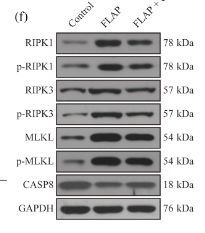
FIGURE 2 CHBP inhibits necroptosis in random-pattern skin flaps. (a,b) Representative immunohistochemical staining for RIPK3 (brown) in mouse skin tissues from the control, FLAP and FLAP + CHBP groups and quantification of integrated absorbance of RIPK3 signal (n = 6 mice per group). The tissues were counterstained with haematoxylin (blue; scale bar = 100 μm). (c,d) Representative images of immunofluorescence staining of mouse skin samples (DAPI staining of the nuclei) and quantification graph for RIPK1 (green)-positive cells (n = 6 mice per group). Scale bar: 10 μm. Skin samples were harvested from mice in the control, FLAP and FLAP + CHBP groups. (e–g) CHBP treatment attenuated the activation of RIPK1, RIPK3 and MLKL induced by ischaemia–reperfusion injury. The expression of caspase 8 (CASP8) was significantly increased, which has an inhibitory effect on necroptosis. Densitometric quantification is shown (n = 6 mice per group). Data shown are means ± SEM. *P 

4). Discovery of Covalent MLKL PROTAC Degraders via Optimization of a Theophylline Derivative Ligand for Treating Necroptosis. Journal of medicinal chemistry, 2024 (PubMed: 39180479) [IF=6.8]

5). Targeting alveolar epithelial cells with lipid micelle-encapsulated necroptosis inhibitors to alleviate acute lung injury. Communications biology, 2025 (PubMed: 40188179) [IF=5.9]

Application: WB    Species: Mouse    Sample: lung tissue

Fig. 2: Expression of necroptosis in LPS-induced ALI. a, d, g Validation of protein expression levels of RIPK1, p-RIPK1, RIPK3, p-RIPK3, MLKL, and p-MLKL in mouse lung tissue with ALI using western blotting. b, c, e, f, h, i Quantitative statistical analysis of the western blotting results was performed by measuring the grayscale values of the bands using Image J, with the target bands normalized to the internal reference (β-actin). j Fluorescence microscope images of paraffin tissue sections from mouse lung tissues stained with anti-p-RIPK1 (green), anti-p-RIPK3 (grey), anti-p-MLKL (red), and DAPI (blue) for visualization, with a scale bar indicating 50μm. At least three samples were included in each group, with three randomly selected fields of view from each sample used to measure and analyze the corresponding fluorescence signal intensity. Significance was determined with p-values 

Application: IF/ICC    Species: Mouse    Sample: lung tissue

Fig. 2: Expression of necroptosis in LPS-induced ALI. a, d, g Validation of protein expression levels of RIPK1, p-RIPK1, RIPK3, p-RIPK3, MLKL, and p-MLKL in mouse lung tissue with ALI using western blotting. b, c, e, f, h, i Quantitative statistical analysis of the western blotting results was performed by measuring the grayscale values of the bands using Image J, with the target bands normalized to the internal reference (β-actin). j Fluorescence microscope images of paraffin tissue sections from mouse lung tissues stained with anti-p-RIPK1 (green), anti-p-RIPK3 (grey), anti-p-MLKL (red), and DAPI (blue) for visualization, with a scale bar indicating 50μm. At least three samples were included in each group, with three randomly selected fields of view from each sample used to measure and analyze the corresponding fluorescence signal intensity. Significance was determined with p-values 

6). Homer1 ameliorates ischemic stroke by inhibiting necroptosis-induced neuronal damage and neuroinflammation. Inflammation research : official journal of the European Histamine Research Society ... [et al.], 2024 (PubMed: 38091015) [IF=4.8]

Application: WB    Species: Mouse    Sample:

Fig. 2 Homer1-KD promoted post-ischemic neuronal necroptosis. A, B Representative images A and quantification B of neuronal death based on TUNEL assay in the ischemic penumbra cortex of each group of mice at 8 h after pMCAO. C Effects of Homer1-KD on the expression level of p-RIPK1, p-RIPK3, and p-MLKL in the ischemic penumbra cortex of each group at 8 h after pMCAO. D–G Quantification of result in C. H Representative photographs of p-MLKL-positive neurons of brain tissue in each group at 8 h after pMCAO. I Quantification of result in H. J, K Representative images J and quantification K of primary neuronal death based on TUNEL assay in vitro of different groups at 4 h after OGD. L Effects of Homer1-KD on the expression level of p-RIPK1, p-RIPK3, and p-MLKL of different groups in vitro experiment at 4 h after OGD. M–P Quantification of result in L. For B, D–G, I, K–N: *P 

7). Mechanism of Xiaojianzhong decoction in alleviating aspirin-induced gastric mucosal injury revealed by transcriptomics and metabolomics. Journal of ethnopharmacology, 2024 (PubMed: 37453623) [IF=4.8]

8). GPR30 Agonist G1 Mitigates Sepsis-Induced Cardiac Dysfunction by Inhibiting ACE2/c-FOS-Mediated Necroptosis in Female Mice. ACS infectious diseases, 2024 (PubMed: 39377746) [IF=4.0]

9). Therapeutic effects of JLX001 on neuronal necroptosis after cerebral ischemia–reperfusion in rats. Experimental Brain Research, 2022 (PubMed: 36255461) [IF=1.7]

限制条款

产品的规格、报价、验证数据请以官网为准,官网链接:www.affbiotech.com | www.affbiotech.cn(简体中文)| www.affbiotech.jp(日本語)

产品的数据信息为Affinity所有,未经授权不得收集Affinity官网数据或资料用于商业用途,对抄袭产品数据的行为我们将保留诉诸法律的权利。

产品相关数据会因产品批次、产品检测情况随时调整,如您已订购该产品,请以订购时随货说明书为准,否则请以官网内容为准,官网内容有改动时恕不另行通知。

Affinity保证所销售产品均经过严格质量检测。如您购买的商品在规定时间内出现问题需要售后时,请您在Affinity官方渠道提交售后申请。

产品仅供科学研究使用。不用于诊断和治疗。 

产品未经授权不得转售。

Affinity Biosciences将不会对在使用我们的产品时可能发生的专利侵权或其他侵权行为负责。Affinity Biosciences, Affinity Biosciences标志和所有其他商标所有权归Affinity Biosciences LTD.