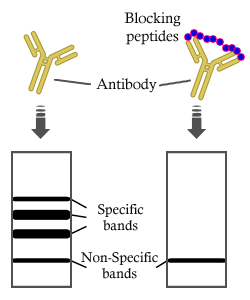
产品: MYOCD 抗体
货号: DF2434
描述: Rabbit polyclonal antibody to MYOCD
应用: WB IHC IF/ICC
文献验证: WB
反应: Human, Mouse, Rat
预测: Bovine, Horse, Rabbit, Dog, Chicken, Xenopus
蛋白号: Q8IZQ8
RRID: AB_2839640

浏览相似产品>>

   规格 价格 库存
 50ul RMB¥ 1250 现货
 100ul RMB¥ 2300 现货
 200ul RMB¥ 3000 现货

货期: 当天发货

联系销售

产品描述

来源:
Rabbit
应用:
WB 1:500-1:2000, IHC 1:50-1:200, IF/ICC 1:100-1:500
*The optimal dilutions should be determined by the end user. For optimal experimental results, antibody reuse is not recommended.
*Tips:

WB: 适用于变性蛋白样本的免疫印迹检测. IHC: 适用于组织样本的石蜡(IHC-p)或冰冻(IHC-f)切片样本的免疫组化/荧光检测. IF/ICC: 适用于细胞样本的荧光检测. ELISA(peptide): 适用于抗原肽的ELISA检测.

反应:
Human, Mouse, Rat
克隆:
Polyclonal
特异性:
MYOCD Antibody detects endogenous levels of total MYOCD.
RRID:
AB_2839640
引用格式: Affinity Biosciences Cat# DF2434, RRID:AB_2839640.
偶联:
Unconjugated.
纯化:
The antiserum was purified by peptide affinity chromatography using SulfoLink™ Coupling Resin (Thermo Fisher Scientific).
保存:
Rabbit IgG in phosphate buffered saline, pH 7.4, 150mM NaCl, 0.02% sodium azide and 50% glycerol. Store at -20 °C. Stable for 12 months from date of receipt.
别名:

展开/折叠

MYCD; MYCD_HUMAN; Myocardin; Myocd;

抗原和靶标

免疫原:

A synthesized peptide derived from human MYOCD, corresponding to a region within the internal amino acids.

基因/基因ID:
描述:
Transcriptional factor that uses the canonical single or multiple CArG boxes DNA sequence. Binds CArG boxes only in the presence of serum response factor (SRF). Acts as a cofactor of SRF and modulates SRF-target genes. Regulates the expression of a set of cardiac and smooth muscle-specific genes. Plays a crucial role in cardiogenesis and differentiation of the smooth muscle cell lineage.

文献引用

1). SREBP1-mediated lipogenesis promotes dedifferentiation and senescence of vascular smooth muscle cells through epigenetic remodeling. Nature Communications, 2025 [IF=15.7]

Application: WB    Species: human    Sample:
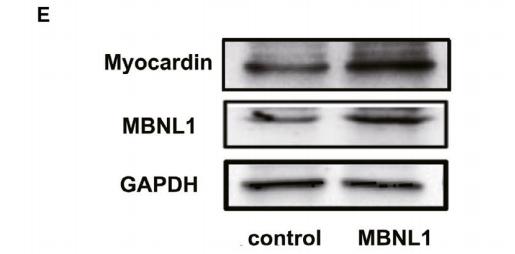
Fig. 4: SREBP1 directly promotes the senescence-like transformation of VSMC by activating lipogenesis. A Correlation between the expressions of SREBPs target genes and VSMC contractile genes (upper left panel), SREBPs target genes and aging genes (lower left panel), SREBP1 target genes and VSMC contractile genes (upper right panel), and SREBP1 target genes and aging genes (lower right panel) in the carotid artery from healthy and atherosclerosis patients (GSE100927). Correlation and P value (two-tailed) are based on Pearson’s correlation. B Heatmap depicting the average expression level of VSMC contractile genes, SREBP1 related genes, aging genes, and fibroblast genes of each VSMC or fibroblast subgroups in the carotid artery from atherosclerosis patients (single-cell transcriptomic, GSE253903). C Relative mRNA expression levels of genes involved in the maintain of VSMC contractile phenotype of MOVAS transfected with siCtrl, si-Srebf1#3, or si-Srebf2#3. Data are presented as mean ± SD. Statistical significance is calculated with a one-way ANOVA followed by Dunnett’s multiple comparisons test (n = 6 biological replicates). D Representative images of cell contraction assay of MOVAS transfected with siCtrl, si-Srebf1#3, or si-Srebf2#3. E Schematic diagram of the agonistic target of LXR-623. F Immunoblot analyses of precursor-SREBP1/2 (p-SREBP1/2), and nucleic-SREBP1/2 (n-SREBP1/2) of MOVAS after DMSO or LXR-623 treatment. Band quantification is normalized to the first lane. G GSEA based transcription factors (TFs) enrichment analysis for the activated TFs of three RNA-seq datasets (CON vs. HU, CTRL vs. SM, and DMSO vs. LXR-623) is shown above. Details of the co-activated TFs (3 in total) are listed below. SREBP1 is highlighted. H GSEA plots showing normalized enrichment scores (NES) and normalized P-value (calculated with an empirical phenotype-based permutation test) for SREBP1 target genes from RNA-Seq (DMSO vs. LXR-623). I The key genes, regulatory processes (black arrows), and heatmap analysis (middle panel) involved in cholesterol synthesis (left panel) and fatty acid synthesis (right panel) pathways. The Log2-transformed fold change (FC) values are presented in parentheses. J Lipid level in MOVAS after DMSO or LXR-623 treatment by BODIPY staining. K Representative transmission electron microscopy images of MOVAS treated with DMSO or LXR-623. Lipid droplets are indicated by red arrows. Scale bar = 2 μm (left panel), 1 μm (zoom-in panel). L Representative images of the cell contraction assay of MOVAS treated with DMSO or LXR-623. Quantifications of cell contraction diameters are shown in the lower panel. Data are presented as mean ± SD. Statistical significance is calculated with a two-tailed unpaired t test (n = 5 biological replicates). M Immunoblot analyses of MYOCD, α-SMA, and SM22α of MOVAS treated with DMSO or LXR-623. Band quantification is normalized to the first lane. The non-specific bands are marked by “*”. N GSEA plots showing normalized enrichment scores (NES) and normalized P-value (calculated with an empirical phenotype-based permutation test) for VSMC contraction from RNA-Seq (DMSO vs. LXR-623). O Representative FACS images of MOVAS treated with DMSO or LXR-623 by SPiDER-βGal staining. P Representative images of β-Gal staining of MOVAS treated with H2O2 (positive control), DMSO or LXR-623. Scale bar = 200 μm.

2). Colchicine reduces neointima formation and VSMC phenotype transition by modulating SRF-MYOCD activation and autophagy. Acta pharmacologica Sinica, 2025 (PubMed: 39663419) [IF=6.9]

3). MBNL1 regulates isoproterenol‐induced myocardial remodelling in vitro and in vivo. JOURNAL OF CELLULAR AND MOLECULAR MEDICINE, 2021 (PubMed: 33295096) [IF=5.3]

Application: WB    Species: mice    Sample: cardiomyocytes
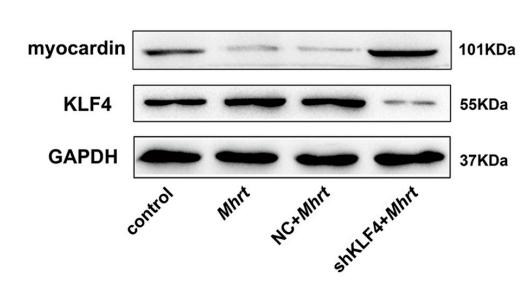
FIGURE 3 MBNL1 increases Myocardin expression by binding to UGCU at the 3'-UTR of Myocardin mRNA. A, The 3'-UTR region of Myocardin contains the binding site of MBNL1. B, The binding of MBNL1 to Myocardin mRNA was validated using RIP. (n = 3, *, P < .05). C-F, The changes in Myocardin and MBNL1 in cardiomyocytes with overexpressed or silenced MBNL1 were measured using realtime PCR and Western blotting. (n = 3, *, P < .05, **, P < .01). G and H, Myocardin mRNA residues after 0, 20, 40 and 60 min in cardiomyocytes treated with Actinomycin D (ACD, 5 μg/mL) and with overexpressed or silenced MBNL1were measured using realtime PCR. I, The 3'-UTR region of Myocardin mRNA was transcribed in vitro and labelled with biotin. The combination of MBNL1 protein and 3'-UTR of Myocardin was detected using RNA pulldown assay. J, The RNA probes corresponding to nine prediction sites (probe # 10-18) and their corresponding antisense probes (probe # 1-9) were synthesized and biotin-labelled. The combination site of MBNL1 protein in the 3'-UTR of Myocardin was confirmed using RNA pull-down assay

4). LncRNA-Mhrt regulates cardiac hypertrophy by modulating the miR-145a-5p/KLF4/myocardin axis. JOURNAL OF MOLECULAR AND CELLULAR CARDIOLOGY, 2020 (PubMed: 31982428) [IF=4.9]

Application: WB    Species: mouse    Sample: primary cardiomyocytes

Fig. 2. |Mhrt regulates myocardin expression through KLF4 in primary cardiomyocytes.(D, E and F) Following knock down of endogenous KLF4 in primary cardiomyocytes, the effect of Mhrt on myocardin mRNA and protein levels was examined (n = 3, *,P < .05, **, P < .01, #, P > .05).

5). KLHL38 facilitates STS‐induced apoptosis in HL‐1 cells via myocardin degradation. IUBMB LIFE, 2022 (PubMed: 35112472) [IF=3.7]

限制条款

产品的规格、报价、验证数据请以官网为准,官网链接:www.affbiotech.com | www.affbiotech.cn(简体中文)| www.affbiotech.jp(日本語)

产品的数据信息为Affinity所有,未经授权不得收集Affinity官网数据或资料用于商业用途,对抄袭产品数据的行为我们将保留诉诸法律的权利。

产品相关数据会因产品批次、产品检测情况随时调整,如您已订购该产品,请以订购时随货说明书为准,否则请以官网内容为准,官网内容有改动时恕不另行通知。

Affinity保证所销售产品均经过严格质量检测。如您购买的商品在规定时间内出现问题需要售后时,请您在Affinity官方渠道提交售后申请。

产品仅供科学研究使用。不用于诊断和治疗。 

产品未经授权不得转售。

Affinity Biosciences将不会对在使用我们的产品时可能发生的专利侵权或其他侵权行为负责。Affinity Biosciences, Affinity Biosciences标志和所有其他商标所有权归Affinity Biosciences LTD.