产品: THBS1 抗体
货号: DF6848
描述: Rabbit polyclonal antibody to THBS1
应用: WB IHC IF/ICC
文献验证: WB, IHC, IF/ICC
反应: Human, Mouse, Rat
预测: Horse, Rabbit, Dog
蛋白号: P07996
RRID: AB_2838807

浏览相似产品>>

   规格 价格 库存
 50ul RMB¥ 1250 现货
 100ul RMB¥ 2300 现货
 200ul RMB¥ 3000 现货

货期: 当天发货

联系销售

产品描述

来源:
Rabbit
应用:
WB 1:500-1:2000, IHC 1:50-1:200, IF/ICC 1:100-1:500
*The optimal dilutions should be determined by the end user. For optimal experimental results, antibody reuse is not recommended.
*Tips:

WB: 适用于变性蛋白样本的免疫印迹检测. IHC: 适用于组织样本的石蜡(IHC-p)或冰冻(IHC-f)切片样本的免疫组化/荧光检测. IF/ICC: 适用于细胞样本的荧光检测. ELISA(peptide): 适用于抗原肽的ELISA检测.

反应:
Human, Mouse, Rat
克隆:
Polyclonal
特异性:
THBS1 Antibody detects endogenous levels of total THBS1.
RRID:
AB_2838807
引用格式: Affinity Biosciences Cat# DF6848, RRID:AB_2838807.
偶联:
Unconjugated.
纯化:
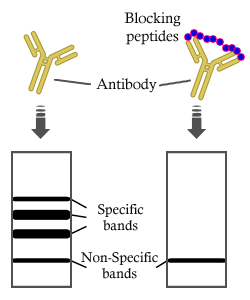
The antiserum was purified by peptide affinity chromatography using SulfoLink™ Coupling Resin (Thermo Fisher Scientific).
保存:
Rabbit IgG in phosphate buffered saline , pH 7.4, 150mM NaCl, 0.02% sodium azide and 50% glycerol. Store at -20 °C. Stable for 12 months from date of receipt.
别名:

展开/折叠

THBS 1; THBS; Thbs1; Thrombospondin 1; Thrombospondin-1; TSP 1; TSP; TSP1; TSP1_HUMAN;

抗原和靶标

免疫原:

A synthesized peptide derived from human THBS1, corresponding to a region within the internal amino acids.

基因/基因ID:
描述:
TSP1, also named as THBS1, THBS and TSP, is an adhesive glycoprotein that mediates cell-to-cell and cell-to-matrix interactions, and which can bind to fibrinogen, fibronectin, laminin, type V collagen and integrins alpha-V/beta-1, alpha-V/beta-3 and alpha-IIb/beta-3. TSP1 is a regulator of many biological processes including cell growth, adhesion, migration, platelet aggregation, and fibrin deposition and lysis. It interacts with a number of plasma proteins such as fibrinogen and plasminogen and co-polymerizes with fibrin in clot formation.

研究领域

· Cellular Processes > Cell growth and death > p53 signaling pathway.   (View pathway)

· Cellular Processes > Transport and catabolism > Phagosome.   (View pathway)

· Cellular Processes > Cellular community - eukaryotes > Focal adhesion.   (View pathway)

· Environmental Information Processing > Signal transduction > Rap1 signaling pathway.   (View pathway)

· Environmental Information Processing > Signal transduction > PI3K-Akt signaling pathway.   (View pathway)

· Environmental Information Processing > Signal transduction > TGF-beta signaling pathway.   (View pathway)

· Environmental Information Processing > Signaling molecules and interaction > ECM-receptor interaction.   (View pathway)

· Human Diseases > Infectious diseases: Parasitic > Malaria.

· Human Diseases > Infectious diseases: Viral > Human papillomavirus infection.

· Human Diseases > Cancers: Overview > Proteoglycans in cancer.

· Human Diseases > Cancers: Overview > MicroRNAs in cancer.

· Human Diseases > Cancers: Specific types > Bladder cancer.   (View pathway)

文献引用

1). Comprehensive single-cell RNA analysis reveals intertumoral microenvironment heterogeneity and hub niche of carcinogenesis in thyroid cancer. NPJ precision oncology, 2025 (PubMed: 41298873) [IF=7.9]

Application: IF/ICC    Species: human    Sample:

Fig. 5: Cell-to-cell communications among thyrocyte and immune cells predicted by the CellChat software in PTC and ATC. A Circle plot summarizing the maximum number of interactions among individual cell types in PTC. The thickness of the lines connecting cells indicates the interaction strength. B The same plot as in (A) but applied to ATC. C Differences of number and strength overall information flow within the inferred networks between PTC and ATC. D The potential outgoing and incoming interaction strength of each cellular cluster in PTC and ATC. Heatmap showing the relative signaling contribution of each cell group based on the number and strength compared PTC with ATC. E Heatmap showing the relative signaling contribution of each cell group based on the number and strength compared PTC with ATC. F Differential strength of network centrality based on APOE+ macrophages (PTC vs. ATC). G Bubble heatmap showing the cell–cell communication of selected ligand–receptor pairs between APOE+ macrophage and CD8+ PDCD1+ T cells. Dot size indicates P value, colored by communication probability. H Multiplex IHC shows the cross-talk between APOE+ macrophages and T cells via the ligand–receptor of THBS1-CD47.

2). Intravenous tenecteplase bridging reperfusion ameliorates cerebral ischemia/reperfusion injury by improving microvascular circulation in rats. Journal of thrombosis and haemostasis : JTH, 2025 (PubMed: 39826801) [IF=5.5]

3). Chemogenetic activation of astrocytic Gi signaling promotes spinogenesis and motor functional recovery after stroke. Glia, 2024 (PubMed: 38436489) [IF=5.4]

4). HIF-1α depletion regulates autophagy to improve arteriosclerosis obliterans of the lower extremities via the TSP-1/CD47 axis. Life sciences, 2025 (PubMed: 40543809) [IF=5.2]

5). Thrombospondin-1 promotes mechanical stress-mediated ligamentum flavum hypertrophy through the TGFβ1/Smad3 signaling pathway. Matrix biology : journal of the International Society for Matrix Biology, 2024 (PubMed: 38281553) [IF=4.5]

Application: WB    Species: human    Sample: LF cells

Fig. 3. Fibrosis phenotype and THBS1/TGFβ1 expression were significantly elevated in the LFH group. (A) The thickness of LF was measured by MRI before operation. The thickness of LF at the L4/5 facet joint level was indicated by red arrow. (B) Representative tissues of LF acquired from patients with spinal surgery. The top three were from non-LFH patients and the bottom three were from LFH patients. Scale bar = 5 mm. (C) Representative images of H&E, MASSON, and EVG staining of the non-LFH group (n = 6) and the LFH group (n = 6). The yellow dotted area represents collagen fibers. Scale bar = 20 μm. (D) Immunohistochemical staining of THBS1, TGFβ1, COL1A2, and α-SMA in the LF samples from LFH group (n = 6) and non-LFH group (n = 6), and the percentage of positive cells was quantified. Scale bar = 20 μm. (E) TEM of LF ultrastructure of non-LFH and LFH groups. The yellow area represents elastin fibers. Scale bar = 8 μm. (F) The qRT-PCR analysis results showing that LFH group (n = 6) had a higher mRNA level of THBS1, TGFβ1, ACTA2 (α-SMA), and COL1A2 compared with non-LFH group (n = 6). The 2−ΔΔCt method was used to normalized with GAPDH. (G) Western blotting assay of THBS1, TGFβ1, COL1A2, and α-SMA protein levels of LF samples of the two groups. GAPDH served as the loading control. EVG: verhoeff's van gieson, TEM: transmission electron microscope, EF: elastic fiber, CF: collagen fiber. **p < 0.01, ***p < 0.001.

Application: IHC    Species: Mouse    Sample:
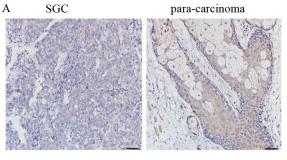
Fig. 7. The mechanical stress-THBS1 axis promotes hypertrophy and fibrosis of LF in vivo. (A) H&E staining of tissues from mice (n = 6 mice per group), and the quantitative analysis of LF area. Scale bar = 50 μm. (B) EVG staining of tissues from mice, and the quantitative analysis of volume fraction of elastin fibers in LF. Scale bar = 20 μm. (C, D) Immunohistochemical staining of α-SMA and THBS1 in mice tissues, and the percentage of positive cells was quantified. Scale bar = 20 μm. Error bars: mean ± S.D. ns, not significant. *p < 0.05, **p < 0.01, ***p < 0.001.

6). Allicin induces cell cycle arrest and apoptosis of breast cancer cells in vitro via modulating the p53 pathway. Molecular Biology Reports, 2021 (PubMed: 34626309) [IF=2.6]

7). Proteomics reveals the regulation of ALG1 expression by lentivirus-mediated THBS1 overexpression and its mechanism in meibomian gland carcinoma. Oncology letters, 2025 (PubMed: 40980150) [IF=2.5]

Application: WB    Species: human    Sample:

Figure 2. - Proteomic analysis following THBS1 overexpression. (A) Fluorescent imaging (×40; scale bar, 200 µm) of NCoe and THBS1oe groups after lentiviral-mediated THBS1 overexpression. (B) Evaluation of THBS1 overexpression using reverse transcription-quantitative PCR and western blot analysis. (C) Hierarchical clustering heatmap of differentially expressed proteins. (D) Volcano plot of DEPs: Green dots indicate downregulated proteins, and red dots indicate upregulated proteins. (E) GO and (F) KEGG pathway enrichment analysis of DEPs. **P

8). MicroRNA‑3907 promotes the proliferation and migration of sebaceous gland carcinoma of the eyelid by targeting thrombospondin 1. Oncology Letters, 2021 (PubMed: 34691259) [IF=2.5]

Application: IHC    Species: Human    Sample: SGC tissues
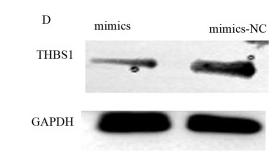
Figure 2. THBS1 expression levels in SGC tissues and cells. (A) Immunohistochemical staining of THBS1 in SGC and para-carcinoma tissues. Expression of THBS1 was negative in SGC tissues, but positive in para-carcinoma tissues. Scale bar, 50 µm. (B) Positive expression rate of THBS1 in eyelid SGC and para-carcinoma formalin-fixed paraffin-embedded samples. (C) Relative mRNA expression levels of THBS1 in SGC cells were lower than those in normal SG cells. **P<0.01 and ***P<0.001. SGC, sebaceous gland cancer; THBS1, thrombospondin 1.

Application: WB    Species: Human    Sample: SGC cells
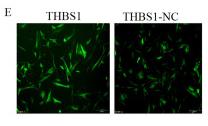
Figure 4. miR-3907 negatively regulates THBS1 expression. (A) Predicted binding sites for miR-3907 within the wild-type and mutant 3'UTR of THBS1. (B) Quantitative analysis of the relative luciferase activity of cells with reporter vectors containing the wild type or mutant THBS1 3'UTR, following miR-3907 co-transfection. (C) Reverse transcription-quantitative PCR and (D) western blotting with semi-quantification analysis revealed decreased THBS1 expression following miR-3907 mimics transfection. *P<0.05 and ***P<0.001. miR, microRNA; THBS1, thrombospondin 1; UTR, untranslated region; NC, negative control.

Application: IF/ICC    Species: Human    Sample: SGC cells

Figure 5. Inhibitory effects of THBS1 on SGC cell proliferation and migration. (A) THBS1-knockdown was induced by transfecting SGC cells with siRNA-THBS1. THBS1 expression level was determined by reverse transcription-quantitative PCR. Results of (B) CCK-8 and (C) wound-healing assays after transfection with siRNA-THBS1; siRNA-THBS1 increased the proliferation and migration of SGC cells. (D) THBS1 overexpression was induced by transfecting lentiviral vectors; THBS1 expression level was determined by reverse transcription-quantitative PCR. (E) Fluorescence assay results revealed that the THBS1 lentivirus vector was successfully transfected. (F) CCK-8 and (G) wound-healing assays results after transfection with THBS1 lentivirus revealed that THBS1 decreased the proliferation and migration of SGC cells. Scale bar, 500 µm. *P<0.05, **P<0.01 and ***P<0.001. SGC, sebaceous gland cancer; siRNA, small interfering RNA; CCK-8, Cell Counting Kit-8; THBS1, thrombospondin 1; NC, negative control.

限制条款

产品的规格、报价、验证数据请以官网为准,官网链接:www.affbiotech.com | www.affbiotech.cn(简体中文)| www.affbiotech.jp(日本語)

产品的数据信息为Affinity所有,未经授权不得收集Affinity官网数据或资料用于商业用途,对抄袭产品数据的行为我们将保留诉诸法律的权利。

产品相关数据会因产品批次、产品检测情况随时调整,如您已订购该产品,请以订购时随货说明书为准,否则请以官网内容为准,官网内容有改动时恕不另行通知。

Affinity保证所销售产品均经过严格质量检测。如您购买的商品在规定时间内出现问题需要售后时,请您在Affinity官方渠道提交售后申请。

产品仅供科学研究使用。不用于诊断和治疗。 

产品未经授权不得转售。

Affinity Biosciences将不会对在使用我们的产品时可能发生的专利侵权或其他侵权行为负责。Affinity Biosciences, Affinity Biosciences标志和所有其他商标所有权归Affinity Biosciences LTD.