产品: BMP2 抗体
货号: AF5163
描述: Rabbit polyclonal antibody to BMP2
应用: WB IHC IF/ICC
文献验证: WB, IHC, IF/ICC
反应: Human, Mouse, Rat
预测: Pig, Bovine, Horse, Sheep, Rabbit, Dog, Chicken, Xenopus
蛋白号: P12643
RRID: AB_2837649

浏览相似产品>>

   规格 价格 库存
 50ul RMB¥ 1250 现货
 100ul RMB¥ 2300 现货
 200ul RMB¥ 3000 现货

货期: 当天发货

联系销售

产品描述

来源:
Rabbit
应用:
IF/ICC 1:100-1:500, WB 1:500-1:2000, IHC 1:50-1:200
*The optimal dilutions should be determined by the end user. For optimal experimental results, antibody reuse is not recommended.
*Tips:

WB: 适用于变性蛋白样本的免疫印迹检测. IHC: 适用于组织样本的石蜡(IHC-p)或冰冻(IHC-f)切片样本的免疫组化/荧光检测. IF/ICC: 适用于细胞样本的荧光检测. ELISA(peptide): 适用于抗原肽的ELISA检测.

反应:
Human, Mouse, Rat
克隆:
Polyclonal
特异性:
BMP2 Antibody detects endogenous levels of total BMP2.
RRID:
AB_2837649
引用格式: Affinity Biosciences Cat# AF5163, RRID:AB_2837649.
偶联:
Unconjugated.
纯化:
The antiserum was purified by peptide affinity chromatography using SulfoLink™ Coupling Resin (Thermo Fisher Scientific).
保存:
Rabbit IgG in phosphate buffered saline , pH 7.4, 150mM NaCl, 0.02% sodium azide and 50% glycerol. Store at -20 °C. Stable for 12 months from date of receipt.
别名:

展开/折叠

BMP 2; BMP 2A; BMP2; BMP2A; Bone morphogenetic protein 2;

抗原和靶标

免疫原:

A synthesized peptide derived from human BMP2, corresponding to a region within the internal amino acids.

基因/基因ID:
描述:
Particularly abundant in lung, spleen and colon and in low but significant levels in heart, brain, placenta, liver, skeletal muscle, kidney, pancreas, prostate, ovary and small intestine.

研究领域

· Environmental Information Processing > Signaling molecules and interaction > Cytokine-cytokine receptor interaction.   (View pathway)

· Environmental Information Processing > Signal transduction > TGF-beta signaling pathway.   (View pathway)

· Environmental Information Processing > Signal transduction > Hippo signaling pathway.   (View pathway)

· Human Diseases > Cancers: Overview > Pathways in cancer.   (View pathway)

· Human Diseases > Cancers: Specific types > Basal cell carcinoma.   (View pathway)

文献引用

1). Microenvironment-responsive multifunctional enzyme-linked hydrogel for diabetic bone defect regeneration. Nature communications, 2025 (PubMed: 41271711) [IF=16.6]

Application: WB    Species: Rat    Sample:

Fig. 7: Functional and mechanistic insights of AAT-ZCG for DM bone defects in regulating FoxO1/P53 signaling pathways. A Volcano plot showing differentially expressed genes (DEGs) between experimental and control groups. Red dots indicate up-regulated genes, and blue dots indicate down-regulated genes. B Gene Ontology (GO) enrichment analysis of up-regulated genes. C GO enrichment analysis of down-regulated genes. D Heatmap of the expression levels of DEGs across experimental groups, with specific key genes like FoxO1 highlighted. E Kyoto encyclopedia of genes and genomes (KEGG) pathway analysis of DEGs, identifying significant pathways such as P53 signaling, FoxO1 signaling. F Schematic diagram illustrates the proposed mechanism of AAT-ZCG in activating the forkhead box O1 (FoxO1) and P53 pathways. G Western blot was conducted to evaluate the effects of AAT-ZCG on inflammation and osteogenesis through the FoxO1/P53 signaling pathway. H The effect of AAT-ZCG on the expression of FoxO1, n = 3. I The effect of AAT-ZCG on P53 expression, n = 3. J The effect of AAT-ZCG on the expression of pP53, n = 3. K The effect of AAT-ZCG on the expression of MMP13, n = 3. L The effect of AAT-ZCG on the expression of BMP2, n = 3. M) The effect of AAT-ZCG on the expression of Acp5, n = 3. Data are presented as mean ± SD. Figure 7H-M involved three biological replications (n = 3) and analysis of these experiments’ results were performed using one-way ANOVA. ns, no statistical significance. Statistical significance is indicated as follows: P 

Application: IF/ICC    Species: Rat    Sample:

Fig. 8: Evaluation of therapeutic effect of AAT-ZCG in vivo. A, B Disintegration of AAT-ZCG in diabetic rats characterized by in vivo imaging of small animals. C CT images of diabetic cranial defect rats at 4 weeks and 8 weeks in different treatment groups. D BV/TV results of each treatment group at 8 weeks. E BS/BV results of each treatment group at 8 weeks. F Histological analysis by hematoxylin and eosin (H&E) staining and massion staining at 8 weeks. G Immunofluorescence staining of Runx2 and BMP2 at 8 weeks. H, I 8 weeks Runx2 and BMP2 immunofluorescence staining relative fluorescence intensity quantification. Blue: DAPI, excitation wavelength (Ex): 405 nm, endow with pseudo-color: RGB (0, 0, 255); Green: BMP2, Ex: 488 nm, endow with pseudo-color: RGB (0, 255, 0); Red: Runx2, Ex: 640 nm, endow with pseudo-color: RGB (255, 0, 0). Data are presented as mean ± SD. Figure 8B involved three biological replications (n = 3), Fig. 8D-E, H-I involved four biological replications (n = 4). Analysis of these experiments’ results were performed using one-way ANOVA. ns, no statistical significance. *P 

2). Novel lncRNA LncMSTRG.11341.25 Promotes Osteogenic Differentiation of Human Bone Marrow Stem Cells via the miR-939-5p/PAX8 Axis. Research (Washington, D.C.), 2025 (PubMed: 39916798) [IF=11.0]

Application: WB    Species: human    Sample:

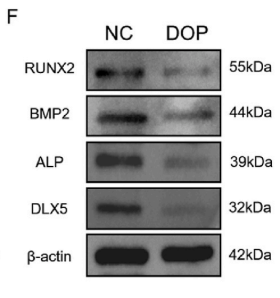
Fig. 4. LncMSTRG25 knockdown inhibited osteogenic differentiation of hBMSCs. (A and B) hBMSCs were transfected with siLncMSTRG25-1, siLncMSTRG25-2, and the negative control and induced to differentiate into osteoblasts for 7 d. To evaluate protein expression levels, Western blotting was performed like PAX8, ALP, BMP2, RUNX2, COLL1, OPN, and OCN. (C and D) qPCR was used to detect the relative expression levels of miR-939-5p, LncMSTRG25-1, PAX8, ALP, BMP2, RUNX2, COLL1, OPN, and OCN. (E) hBMSCs were transfected with siLncMSTRG25-1, siLncMSTRG25-2, or a negative control and induced to differentiate into osteoblasts for 14 d. ARS and ALP staining methods were utilized to identify osteoblast differentiation. (F) Immunofluorescence with specific antibodies was used to detect the expression of PAX8, BMP2, and RUNX2 following 7 d of osteoblast differentiation. Data are the mean ± SD of 3 independent experiments. *P < 0.05, **P < 0.01, ***P < 0.001, and ****P < 0.0001.

3). A novel hierarchical biofunctionalized 3D-printed porous Ti6Al4V scaffold with enhanced osteoporotic osseointegration through osteoimmunomodulation. Journal of nanobiotechnology, 2022 (PubMed: 35123501) [IF=10.2]

4). Peripheral nerves modulate the peri-implant osteogenesis under type 2 diabetes through exosomes derived from schwann cells via miR-15b-5p/Txnip signaling axis. Journal of nanobiotechnology, 2025 (PubMed: 39875954) [IF=10.2]

5). A novel multifunctional nanocomposite hydrogel orchestrates the macrophage reprogramming-osteogenesis crosstalk to boost bone defect repair. Journal of nanobiotechnology, 2024 (PubMed: 39533396) [IF=10.2]

Application: IF/ICC    Species: Rat    Sample:
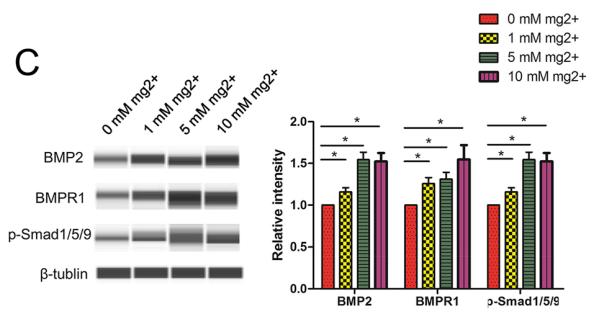
Fig. 5 Osteogenic and osteoclastic differentiation of hydrogel. (A, B) ALP staining. (C, D) ARS staining. (E, F) Immunofluorescence staining of BMP-2 and OCN. (G) ALP activity assay. (H, I) Quantitative analysis of ALP and ARS staining. (J, K) Quantitative analysis of BMP-2 and OCN immunofluorescence staining. (L, M) Immunofluorescence staining and quantitative analysis of CTR immunofluorescence staining. (N) TRAP staining of BMDMs-derived osteoclasts. (NS, no significant difference; *, P 

6). Mechanosensitive Piezo1 is crucial for periosteal stem cell-mediated fracture healing. International Journal of Biological Sciences, 2023 (PubMed: 35844802) [IF=8.2]

7). Osteogenic potential evaluation of biotin combined with magnesium-doped hydroxyapatite sustained-release film. Materials science & engineering-C, Materials for biological applications, 2022 (PubMed: 35581076) [IF=8.1]

8). Magnesium-enriched microenvironment promotes odontogenic differentiation in human dental pulp stem cells by activating ERK/BMP2/Smads signaling. Stem Cell Research & Therapy, 2019 (PubMed: 31823825) [IF=7.5]

Application: WB    Species: Human    Sample: DPSCs

Fig. 6 The ERK and BMP2 signaling pathway is activated by high extracellular Mg2+ in DPSCs during odontogenic differentiation. a ERK phosphorylation was significantly enhanced in DPSCs treated with 1 mM, 5 mM, and 10 mM Mg2+ compared with the 0 mM Mg2+ group, but p38 and JNK phosphorylation amounts were unchanged. b ERK phosphorylation was reduced by 2-APB. c Consistently, the protein levels of BMP2, BMPR1, and phosphorylated Smad1/5/9 were significantly increased in DPSCs exposed to high extracellular Mg2+. d BMP2, BMPR1, and phosphorylated Smad1/5/9 protein amounts were decreased by 2-APB

9). Extracellular vesicles from the inflammatory microenvironment regulate the osteogenic and odontogenic differentiation of periodontal ligament stem cells by miR-758-5p/LMBR1/BMP2/4 axis. Journal of translational medicine, 2022 (PubMed: 35562763) [IF=7.4]

Application: WB    Species: human    Sample:

Fig. 7 Knock-down of LMBR1 promoted the osteogenic and odontogenic differentiation of PDLSCs. A The potential binding site between miR-758-5p and LMBR1 predicted by bioinformatics. B Dual-luciferase reporter assay demonstrated the correlation between miR-758-5p and LMBR1. C qRT-PCR evaluated the downregulation of LMBR1 by siRNAs. D Western blot evaluated the suppression of LMBR1 by siRNAs. E The results of the CCK-8 assay showed cell proliferation after the downregulation of LMBR1. F Relative mRNA levels of ALP, DSPP, OSX, and RUNX2 when LMBR1 was knocked down. G Western blot assay showed the expression of ALP, DSPP, OSX, and RUNX2 after transfection of siRNAs. H Histogram derived from relative protein expression of western blot. I Result of ARS staining. J Quantification of ARS staining. K Result of ALP staining. L Western blot showed the condition of BMP2 and BMP4 when miR-758-5p was overexpressed or inhibited. M Western blot showed the condition of BMP2 and BMP4 when LMBR1 was knocked down. N Protein levels of ALP, DSPP, RUNX2 and OSX in rescue experiment. O Protein levels of BMP2 and BMP4 in rescue experiment. n = 3, ***P 

10). MicroRNA-93-5p regulates odontogenic differentiation and dentin formation via KDM6B. Journal of translational medicine, 2024 (PubMed: 38218880) [IF=7.4]

加载更多

限制条款

产品的规格、报价、验证数据请以官网为准,官网链接:www.affbiotech.com | www.affbiotech.cn(简体中文)| www.affbiotech.jp(日本語)

产品的数据信息为Affinity所有,未经授权不得收集Affinity官网数据或资料用于商业用途,对抄袭产品数据的行为我们将保留诉诸法律的权利。

产品相关数据会因产品批次、产品检测情况随时调整,如您已订购该产品,请以订购时随货说明书为准,否则请以官网内容为准,官网内容有改动时恕不另行通知。

Affinity保证所销售产品均经过严格质量检测。如您购买的商品在规定时间内出现问题需要售后时,请您在Affinity官方渠道提交售后申请。

产品仅供科学研究使用。不用于诊断和治疗。 

产品未经授权不得转售。

Affinity Biosciences将不会对在使用我们的产品时可能发生的专利侵权或其他侵权行为负责。Affinity Biosciences, Affinity Biosciences标志和所有其他商标所有权归Affinity Biosciences LTD.