
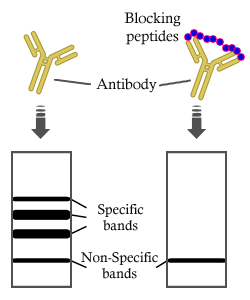
产品: 磷酸化 JAK2 (Tyr931) 抗体
货号: AF3024
描述: Rabbit polyclonal antibody to Phospho-JAK2 (Tyr931)
应用: WB IHC IF/ICC
文献验证: WB, IHC, IF/ICC
反应: Human, Mouse, Rat
预测: Pig, Bovine, Horse, Sheep, Rabbit, Dog, Chicken, Xenopus
蛋白号: O60674
RRID: AB_2834455

浏览相似产品>>

   规格 价格 库存
 50ul RMB¥ 1300 现货
 100ul RMB¥ 2400 现货
 200ul RMB¥ 3200 现货

货期: 当天发货

联系销售

产品描述

来源:
Rabbit
应用:
WB 1:500-1:2000, IHC 1:50-1:200, IF/ICC 1:100-1:500
*The optimal dilutions should be determined by the end user. For optimal experimental results, antibody reuse is not recommended.
*Tips:

WB: 适用于变性蛋白样本的免疫印迹检测. IHC: 适用于组织样本的石蜡(IHC-p)或冰冻(IHC-f)切片样本的免疫组化/荧光检测. IF/ICC: 适用于细胞样本的荧光检测. ELISA(peptide): 适用于抗原肽的ELISA检测.

反应:
Human, Mouse, Rat
克隆:
Polyclonal
特异性:
Phospho-JAK2 (Tyr931) Antibody detects endogenous levels of JAK2 only when phosphorylated at Tyrosine 931.
RRID:
AB_2834455
引用格式: Affinity Biosciences Cat# AF3024, RRID:AB_2834455.
偶联:
Unconjugated.
纯化:
The antibody is from purified rabbit serum by affinity purification via sequential chromatography on phospho-peptide and non-phospho-peptide affinity columns.
保存:
Rabbit IgG in phosphate buffered saline , pH 7.4, 150mM NaCl, 0.02% sodium azide and 50% glycerol. Store at -20 °C. Stable for 12 months from date of receipt.
别名:

展开/折叠

JAK 2; JAK-2; JAK2; JAK2_HUMAN; Janus Activating Kinase 2; Janus kinase 2 (a protein tyrosine kinase); Janus kinase 2; JTK 10; JTK10; kinase Jak2; OTTHUMP00000043260; THCYT3; Tyrosine protein kinase JAK2; Tyrosine-protein kinase JAK2;

抗原和靶标

免疫原:

A synthesized peptide derived from human JAK2 around the phosphorylation site of Tyr931.

基因/基因ID:
描述:
This gene product is a protein tyrosine kinase involved in a specific subset of cytokine receptor signaling pathways. It has been found to be constituitively associated with the prolactin receptor and is required for responses to gamma interferon.

研究领域

· Cellular Processes > Cell growth and death > Necroptosis.   (View pathway)

· Cellular Processes > Cellular community - eukaryotes > Signaling pathways regulating pluripotency of stem cells.   (View pathway)

· Environmental Information Processing > Signal transduction > PI3K-Akt signaling pathway.   (View pathway)

· Environmental Information Processing > Signal transduction > Jak-STAT signaling pathway.   (View pathway)

· Human Diseases > Drug resistance: Antineoplastic > EGFR tyrosine kinase inhibitor resistance.

· Human Diseases > Infectious diseases: Parasitic > Leishmaniasis.

· Human Diseases > Infectious diseases: Parasitic > Toxoplasmosis.

· Human Diseases > Infectious diseases: Bacterial > Tuberculosis.

· Human Diseases > Infectious diseases: Viral > Measles.

· Human Diseases > Infectious diseases: Viral > Influenza A.

· Human Diseases > Infectious diseases: Viral > Herpes simplex infection.

· Human Diseases > Cancers: Overview > Pathways in cancer.   (View pathway)

· Organismal Systems > Immune system > Chemokine signaling pathway.   (View pathway)

· Organismal Systems > Immune system > Th1 and Th2 cell differentiation.   (View pathway)

· Organismal Systems > Immune system > Th17 cell differentiation.   (View pathway)

· Organismal Systems > Nervous system > Cholinergic synapse.

· Organismal Systems > Endocrine system > Prolactin signaling pathway.   (View pathway)

· Organismal Systems > Endocrine system > Adipocytokine signaling pathway.

文献引用

1). ITGA5-expressing tumor cells interact with Schwann cells to drive nerve growth factor-mediated immunosuppression of NK cells. Molecular therapy : the journal of the American Society of Gene Therapy, 2025 (PubMed: 40734271) [IF=12.1]

Application: WB    Species: Mouse    Sample: Schwann cells
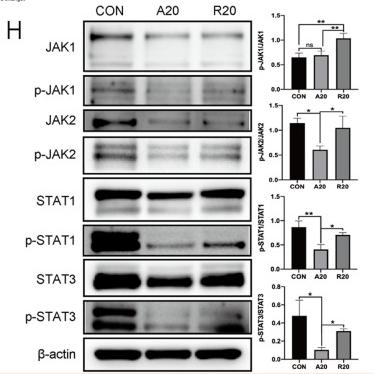
Figure 4 ITGA5-induced NGF secretion in Schwann cells (A) Representative figures of GFAP (red) and p75NTR (green) staining in tumor tissues. Scale bar: 20 μm. (B) Quantification of GFAP+ cells and GFAP+p75NTR+ cells. (C) Flow cytometry analysis of GFAP and c-Jun expression in Schwann cells (SCs). (D) Relative expression of Ngf mRNA. The y axis represents the relative expression levels using the housekeeping gene Gapdh as the standard. CCs, cancer cells. n = 3 technical replicates. (E) Quantification of secreted NGF in CCs and SCs by ELISA (n = 3 technical replicates). (F) Predicted interaction of fibronectin to protein itga5. Nodes represent individual proteins, with ITGA5/Itga5 as the central node. Edges indicate predicted interactions, with line thickness reflecting confidence scores. Line colors denote evidence types: curated databases (sky blue), experimental interactions (purple), co-expression (black), etc. Functional partners are labeled with gene symbols. (G) Molecular model of the interaction between ITGA5 (blue) and FN1 (red). At right is an enlarged view of interacting amino acid residues. (H) Expression levels of Fn1 mRNA in NC and OE groups. (I) Relative expression of Ngf mRNA. The y axis represents the relative expression levels using the housekeeping gene Gapdh as the standard. NC, negative control. (J) Quantification of secreted NGF in si-Ctrl and si-Fn1 SCs detected by ELISA (n = 3 technical replicates). (K) Transcript levels of reparative SC markers in samples from each group. (L) KEGG pathway enrichment analysis of genes significantly downregulated by si-Fn1 treatment. (M) Representative western blot images showing the expression of STAT3, p-STAT3, JAK2, p-JAK2, and GAPDH as the loading control. Quantitative analysis of band intensity normalized to GAPDH. CM, conditioned medium. Each bar represents the mean (SEM) from three independent experiments. ∗p < 0.05; ∗∗∗p < 0.001; ∗∗∗∗p < 0.0001. Statistical comparisons were performed using two-tailed independent samples t tests.

2). Lacc1-engineered extracellular vesicles reprogram mitochondrial metabolism to alleviate inflammation and cartilage degeneration in TMJ osteoarthritis. Journal of nanobiotechnology, 2025 (PubMed: 40186254) [IF=10.2]

3). Aligned electrospun poly(l-lactide) nanofibers facilitate wound healing by inhibiting macrophage M1 polarization via the JAK-STAT and NF-κB pathways. JOURNAL OF NANOBIOTECHNOLOGY, 2022 (PubMed: 35883095) [IF=10.2]

Application: WB    Species: Mice    Sample:

Fig. 3 The underlying mechanism by which aligned fibers affected macrophage polarization. A Venn diagram showing differentially expressed genes. B KEGG pathway analysis between the A20 and R20 groups. C Heatmap of differentially expressed genes among the three groups. D Heatmap of macrophage polarization-related genes between the A20 and R20 groups. E Volcano diagram of differentially expressed genes. F Western blot analysis of the NF-κB signaling pathway. G Immunofluorescence staining showing the nuclear translocation of NF-κB p65. The nucleus is stained blue, and NF-κB p65 protein is stained red. H Western blot images and semiquantitative analysis of the JAK-STAT signaling pathway (*p < 0.05, **p < 0.01, n = 3)

4). Modulating the Immunosuppressive Tumor Microenvironment and Inhibiting Growth in Mutp53-Driven CRPC via STAT3 Pathway Blockade. International journal of biological sciences, 2025 (PubMed: 40384867) [IF=8.2]

Application: IHC    Species: Mouse    Sample:

Figure 3. Oncogenic potential and altered molecular signaling in Mutp53 prostate cancer (PCa). A. Graphical representation comparing tumor sizes between mutant p53 (mutp53) and wild-type p53 (WTp53) mouse models (n = 7 per group). B. Time-course curves of tumor volume measurements for both the WTp53 and mutp53 groups (t test, p < 0.05). C. Comparative analysis of tumor weights between the mutp53 and WTp53 groups (t test, p < 0.001). D. Overview of genes differentially expressed in mutp53 versus WTp53 tumors. E. Hallmark pathway enrichment analysis of the differentially expressed genes revealed key signaling pathways altered in mutp53 tumors compared with WTp53 tumors. F-H. Immunohistochemical staining (F) and quantification of p-JAK2 (G) and p-STAT3 (H) expression in tumor tissues between the p53-mutated and p53-nonmutated groups. I. Western blotting assays showing increased levels of phosphorylated JAK2 and STAT3 in mutp53 PCa cells following IL-6 stimulation. Note: To compare two groups, a t test was used. The values are mean ± SD of three independent experiments.

5). Alhagi camelorum seed polysaccharide alleviates methylglyoxal-induced skin damage via antioxidant and anti-inflammatory actions. International journal of biological macromolecules, 2025 (PubMed: 40311972) [IF=7.7]

6). Formononetin protects against inflammation associated with cerebral ischemia-reperfusion injury in rats by targeting the JAK2/STAT3 signaling pathway. BIOMEDICINE & PHARMACOTHERAPY, 2022 (PubMed: 35339827) [IF=6.9]

7). Phillygenin inhibited M1 macrophage polarization and reduced hepatic stellate cell activation by inhibiting macrophage exosomal miR-125b-5p. BIOMEDICINE & PHARMACOTHERAPY, 2023 (PubMed: 36652738) [IF=6.9]

Application: IF/ICC    Species: Mouse    Sample: RAW264.7 cells

Fig. 2. PHI inhibited the JAK/STAT and Notch1 signaling pathways in RAW264.7 cells. (a) The 3D and 2D models of molecular docking of PHI and JAK1. (b) The 3D and 2D models of molecular docking of PHI and JAK2. (c) The 3D and 2D models of molecular docking of PHI and Notch1. (d-g) The expression of JAK1, JAK2, STAT1 and Notch1 mRNA in RAW264.7 cells after treatment with LPS/IFNγ and PHI for 12 h was detected by RT-qPCR (n = 3). (h) The expression of JAK1, JAK2, p-JAK1, p-JAK2, STAT1, p-STAT1 and Notch1 proteins in RAW264.7 cells after treatment with LPS/IFNγ and PHI for 12 h was detected by western blotting. (i-l) The relative quantification of p-JAK1/JAK1, p-JAK2/JAK2, p-STAT1/STAT1, and Notch1 protein expression in western blotting results was analyzed by ImageJ software (n = 3). Results are presented as mean ± SD. ###P 

8). β-elemene alleviates hyperglycemia-induced cardiac inflammation and remodeling by inhibiting the JAK/STAT3-NF-κB pathway. Phytomedicine, 2023 (PubMed: 37531901) [IF=6.7]

9). Hesperidin Inhibits Oxidative Stress and Apoptosis of Granulosa Cells in Polycystic Ovarian Syndrome Through the JAK2/STAT3 and PI3K/AKT Pathways. Phytotherapy research : PTR, 2025 (PubMed: 41014201) [IF=6.1]

10). Design, synthesis and biological evaluation of N-anthraniloyl tryptamine derivatives as pleiotropic molecules for the therapy of malignant glioma. EUROPEAN JOURNAL OF MEDICINAL CHEMISTRY, 2021 (PubMed: 34091208) [IF=6.0]

Application: WB    Species: Human    Sample: U251 and U87MG cells

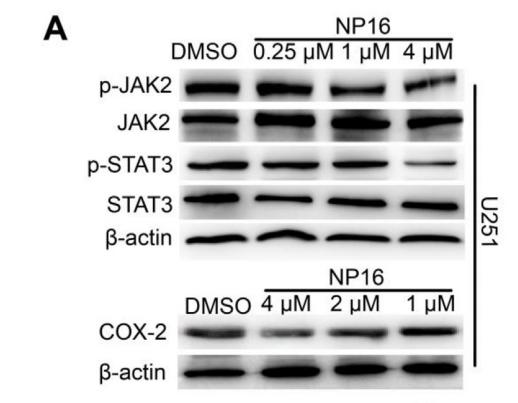
Fig. 2. NP16 down-regulated the expression of COX-2, p-JAK2 and p-STAT3, and inhibited the nuclear translocation of STAT3 in both U251 and U87MG cells. (A, B) western blot analysis of the expression of JAK2, p-JAK2, p-STAT3 and STAT3: the cells were exposed to NP16 at concentrations of 0.25, 1 and 4 mM for 8 h; western blot analysis of the expression of COX-2: the cells were exposed to NP16 at concentrations of 1, 2 and 4 mM for 24 h (C, D, E) Relative expression of the target protein in the cell lysate was calculated using the ImageJ image analysis software. Each error bar represents the mean ± SD of three independent experiments. *P < 0.05, **P < 0.01 and ***P < 0.001 versus the DMSO group. (F, G) representative fluorescence microscopy images: the cells were exposed to NP16 at concentrations of 4 mM for 8 h. Compound NP16 inhibited nuclear translocation of STAT3 in both U251 and U87MG cells. (Magnification  60, scale bar ¼ 20 mm).

加载更多

限制条款

产品的规格、报价、验证数据请以官网为准,官网链接:www.affbiotech.com | www.affbiotech.cn(简体中文)| www.affbiotech.jp(日本語)

产品的数据信息为Affinity所有,未经授权不得收集Affinity官网数据或资料用于商业用途,对抄袭产品数据的行为我们将保留诉诸法律的权利。

产品相关数据会因产品批次、产品检测情况随时调整,如您已订购该产品,请以订购时随货说明书为准,否则请以官网内容为准,官网内容有改动时恕不另行通知。

Affinity保证所销售产品均经过严格质量检测。如您购买的商品在规定时间内出现问题需要售后时,请您在Affinity官方渠道提交售后申请。

产品仅供科学研究使用。不用于诊断和治疗。 

产品未经授权不得转售。

Affinity Biosciences将不会对在使用我们的产品时可能发生的专利侵权或其他侵权行为负责。Affinity Biosciences, Affinity Biosciences标志和所有其他商标所有权归Affinity Biosciences LTD.